Archive for the ‘River Report’ Category

New tree-house fishing hut and wildlife pond in David’s Wood

Monday, June 7th, 2010
Foundations for tree-house fishing hut

Castle Beat Fishing Hut under construction

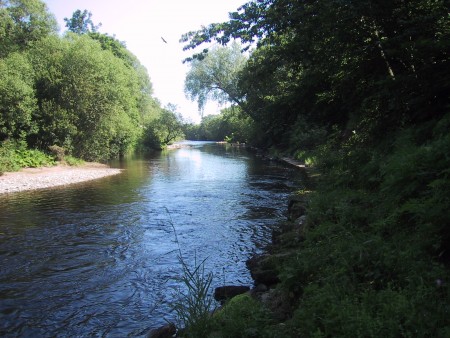
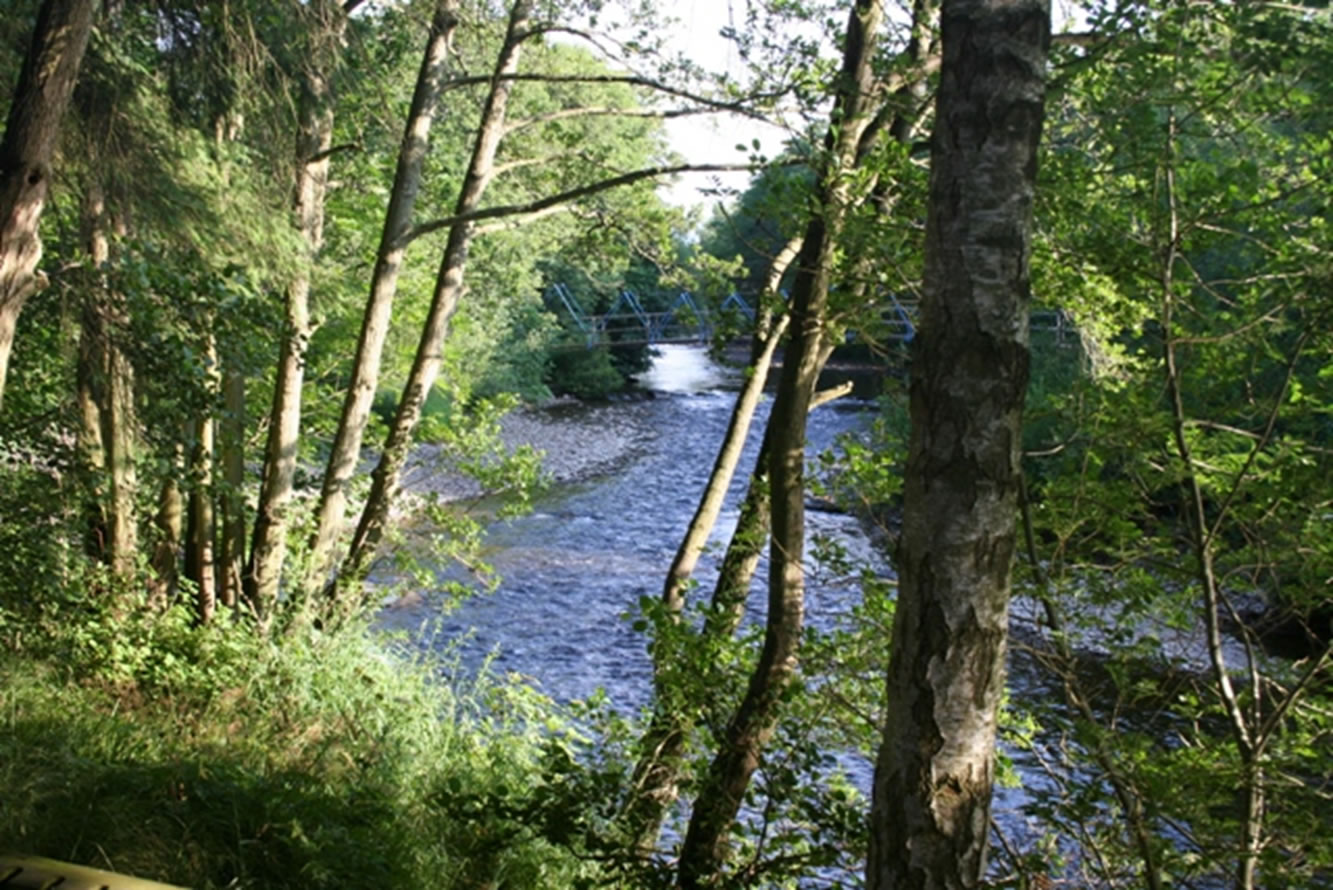
Our plans to transform David’s Wood on the north bank of Pheasantry into a place of tranquility for people and wildlife are now progressing quickly. Our master craftsman, Will Wells, has completed the foundations in preparation for the arrival of the frame of the hut itself and its Scottish larch roof shingles. When finished, the view from the veranda – with beech trees growing through its roof – will look down on the delightful streamy flow of Pheasantry Pool and across to the high Red Brae bank with the sharp edge of the old vitrified fort of Finavon Hill as the backdrop. This place is the heart of the Finavon Castle Water experience, but then so are the three other huts’ locations! (Red Brae south, Harry’s Bar south and Indies north). There is something very special about David’s Wood which I am sure will be appreciated by our visitors. History, privacy and tranquility, not to mention some good fishing when conditions are right, combine to make this a uniquely relaxing place to be.

Close by the tree-house hut is our new wildlife pond (see below). Already, after only a month, we have seen water beetles, boatmen and a profusion of other invertebrates. With the native lilies, reeds, flags and rushes all settling in well, and with a happy family of mallards already thinking about making the pond one of their regular residences, we have exceeded our own expectations by a considerable margin. We will try to keep the pool fish-free (there being more than enough in the river!) but the likelihood is that minnows, sticklebacks and eels, along with frogs, toads and newts, will soon colonise this most lovely woodland pool.

David's Wood Pond after one month

New pond for amphibians, invertebrates and ducks

Building the pond presented us with a challenge because the soil along the S Esk river banks is very porous, necessitating some sort of water-holding liner. We went for the very best on the market, in the form of Bentomat, which is a smart form of clay liner. The key ingredient is bentonite which is volcanic ash that fell into lakes (or the sea, but that’s a different chemical compound) and through millions of years formed a clay-based sedimentary rock which when mined (in Australia and other places) produces a fine white powder. When water is added to bentonite it expands massively and makes a gooey clay layer. the Bentomat product is simply bentonite sandwiched between two layers of very tough, synthetic, non-woven fabric. With a sprinkling of bentonite powder between each overlap and each 5m strip of bentomat laid to cover the prepared pond area (with the spoil providing hard standing for the new vehicle track all the way up the N bank to Pheasantry), we now have a stable pond that holds its water level extraordinarily well, and which has become an important focus for wildlife. It certainly adds a new dimension to the Castle Beat experience!

TA

First genuine spring report of 2010

Saturday, April 10th, 2010

Yes, the spring salmon have arrived at last! A bit later than usual, but it has been a long cold winter. Two weeks ago we were in the grip of a last flurry of snow and ice, with heavy falls of snow in the Glens and mountains. As I write this bulletin on the 10th of April there are still some large fields of snow in Glen Clova, and I’m sure a lot more on the northern slopes and corries.

We have had two pristine, beautiful 2SW springers – both returned alive to the river of course – one of 7lbs from Tyndals and the 8lb fish from the now exclusive-to-Finavon-fishers Marcus House Pool, a great place to fish and catch a salmon on a lovely spring day.

Tyndals Pool at dusk

Another cold winter probably means better feeding for our sea trout from an abundance of zoo plankton. So, to encourage our readers I have put a photo of Tyndals on an ideal evening for a sea trout.

Tight lines from the FCW team on 10/4/2010

Spring Salmon Fishing 2010

Wednesday, March 17th, 2010

After the long winter the hills are appearing again from beneath the snow drifts. The air temperature hovers a bit above freezing at night, and rises to double figures during the day. The oyster catchers have arrived upriver from their winter quarters on the coast. Pigeons are making love amidst a lot of cooing, and the last of the salmon kelts, mainly female fish because the male ones are nearly all dead, are slowly making their way to the sea. If the number of fish that spawned = 100% we can expect only 2/3% of females to survive to spawn again, and virtually no males. Survival at sea is very poor, much worse than 50 years ago when ’second returners’ were not unusual. Today they are a rarity.

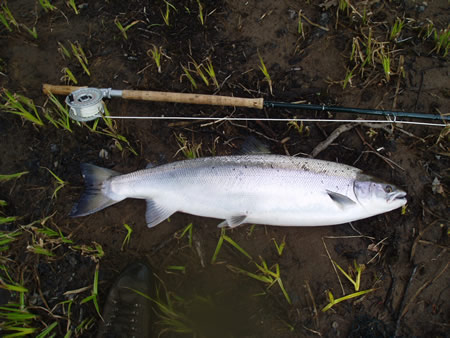
We are now awaiting the arrival of the first spring salmon. Some may already be in Finavon’s pools. or have passed through to the dubs and rocky gorges upstream at Inshewan or Cortachy. Some may even be well up into Glen Clova. But my guess is that the rising water temperature and water levels will persuade fish to enter the river in  good numbers within the next two weeks. I expect us to catch our first salmon of 2010, as opposed to the dozen or so kelts already caught and returned by our local anglers, within the next 2/3 weeeks. It could be tomorrow! Whenever that does happen, it marks for the FCW team the real start of the new season. The salmon in the photo is a nice example of an early April South Esk salmon caught in 2009, just a bit smaller than the average weight for spring fish, which is 9lbs.

7lbs Salmon 8 April 09 Tyndals

7lbs Salmon 8 April Tyndals

Our other news is the successful completion of constructing the new track for 4×4’s, and enterprising drivers of normal cars, and a big wildlife pond in David’s Wood, where we will be building what we think may be Scotland’s first tree-house fishing hut in a group of four beech trees overlooking Pheasantry and across to the ancient vitrified fort on top of Finavon Hill. More about these developments in later blogs.

Tony Andrews

Late Winter Report from Finavon

Friday, February 26th, 2010

Like everywhere else in Scotland, this has been a long and cold winter. After the massive floods of November and early December, which should have seen most salmon reach their spawning locations, the weather closed in and the temperature dropped. The result was nearly ideal conditions for spawning and, because river levels have remained quiet (as opposed to a raging torrent) the redds should have been undisturbed to allow the fertilised eggs to gestate in the gravel. The season opened on the 16th of February, and we hear of at least two nice fish (c. 14lbs) caught and returned at Kinnaird, which is about 9 miles downstream of Finavon.

The river is in tremendous ply, with the water clean and clear and the bed of the river washed clean by the floods. In places there is some damage, mainly to the banks, but very little change to the depth of the main holding pools. An interesting snippet of news just before the season opened was a report from Steve Hawkins, the river board’s bailiff for the South Esk, that he had seen a pod of early running salmon in the 5-7 lbs weight range running through the Flats on Milton Beat at Finavon. As far as we know, these are the only early fish seen on either the South or the North Esk rivers above the dams at Kinnaird and Morphie respectively.

People who fish regularly here ask me what the omens are for 2010. I can only guess that another cold winter will have done no harm to the availablility of prey species in the coastal zone for sea trout. In cold winters, like this one, both zoo plankton and phyto plankton benefit from very cold water temperatures - in much the same way as in the arctic and antarctic regions, where there is such a phenomenal supply of food for pelagic species of fish. If I am right, and I am not a scientist so my comments are at best an educated guess, we may well see increased numbers of sea trout in June, July and August 2010. Finavon is really best known for its sea trout and in the not-so-distant past we could expect catches of 300+ sea trout averaging 2lbs 10oz. It is becoming likely that we will see a return to such numbers and quality of sea trout.

As far as salmon are concerned the picture is mixed. Our grilse vary hugely in condition and there is a worrying trend for two sea-winter salmon (2SW) to return to the river under-weight. Some early running 2SW salmon have weighed as little as 4lbs. Something is wrong in the South Norwegian Sea in terms of availability of food for salmon and grilse. The issue is complicated by the fact that not all our returning salmon and grilse pass through the S Norwegian Sea. Generally it is true to say that the condition of fish avoiding that area is better than those using it as a staging post on their return. The NASCO and Atlantic Salmon Trust’s research into the lives of salmon at sea may reveal what the problem is.

As I write this bulletin on the 26th February, the snow is still falling and the high corries, where the South Esk rises, are packed full of ice and snow. We can expect a long thaw, perhaps well into May. If there are spring salmon to be caught they should have sufficient water to enter the river. A long cool spring is exactly what we now need! Meanwhile the nets South of Montrose start operations in May, but they have promised not to kill any sea trout for selling to the fish markets. We therefore have genuine optimism that we will see more fish entering the river, and less being killed by the netsmen. Our responsibility as anglers is to kill the very minimum number of fish. If we can ensure that good numbers of salmon and sea trout reach the redds to spawn, we will have made a big contribution to their conservation.  Restraint and good husbandry are the order of the day!

Tony Andrews

7lb Sea Trout from Craigo Stream Pool (Returned)

7lb Sea Trout from Craigo Stream Pool (Returned)

The 2010 Season: A Crystal Ball

Wednesday, December 9th, 2009

So, what can we expect in 2010? My view is that we should see the sea trout numbers continue to improve. I say this on the evidence of a big increase in terms of prey biomass around Scotland’s coast. This has been recorded by SNH and it appears that there is a similar trend in Ireland and Northern England. No-one is able to explain why there should be a sudden and unexpected increase in zoo plankton, phyto-plankton, sand-eels etc . What we can say however, is that further afield in the South Norwegian Sea, things are not looking so good with a collapse in herring, blue whiting and mackerel stocks. Interactions between salmon (and to a lesser extent in the open sea) and other species tell us a lot. To summarise; close to Scotland’s shores there seems to be plenty of food, but elsewhere the situation is at best patchy. Conclusion? OK for sea trout, not so good for grilse, and possible OK for 2 sea-winter salmon and the odd 3 sea-winter salmon that survives.

Melgund Pool on Indies Beat

Melgund Pool on Indies Beat

The Last Hurrah for the South Esk 2009 Season

Friday, October 23rd, 2009

The drought lasted until earlier this week, when the heavens opened and the South Esk rose more than five feet at Gella Bridge to bring down a chocolate spate. The water cleared quickly, but the rain kept coming and the river today is huge with only Lower Boat Pool and Indies Pool fishable. Nevertheless we have an intrepid party of keen fly fishermen working hard to catch autumn salmon.

As I write this on Friday 23 October, with just 8 days of the 2009 season left, Finavon castle Water catches remain at 99 salmon and 113 sea trout. Hopes are high that the next few days will bring good numbers of fish into the FCW beats and improve our catches.

There have been plenty of fish in the river throughout the dry six weeks of September and October, and all our visitors have seen them – some big fish amongst them – getting staler and more coloured by the day as the drought wore on. But this flood will have changed all that, with a big influx of new fish from the sea and the departure of many old residents up the Glen to the high tributaries and spawning redds.

Leaves are always a bit of a problem at this time of year. A big sycamore leaf, carried in a strong current, can seem very similar to the gentle take of a large autumn salmon. And the South Esk is a genuine ‘big fish river’, especially in the back end when fish over 20lbs are regularly caught, and sometimes much heavier than that. I expect to see fish of over 15lbs showing in all the main FCW pools in the next few days.

Whatever happens, and however many fish we catch, I always feel ready to come to the end of the season at this time of year. The fish are getting ready to spawn, the geese are flying over Finavon in huge skeins and the colours of winter are nearly on us. This really is the last hurrah for the South Esk 2009 season, and it can be the most productive time of the whole year. Everything depends on reasonable water levels and the presence of good numbers of salmon. The next 48 hours will show us what to expect next week.

Lunch in Indies Hut

Lunch in Indies Hut

This was Meant to be a Dry Season!

Friday, August 28th, 2009

This was meant to be a dry season, according to long range forecasts. It has turned out to be the complete opposite! We have had steady rain throughout August and, as I write this towards the end of the month, the total catches for the season are Salmon pushing towards 60 and sea trout just under 100. A feature of 2009 has been the number of large fish showing in the pools. In July and August five salmon of over 20lbs were hooked and lost, one of them at the net in the presence of Moray Macfarlane, who couldn’t stretch his hand around the massive wrist of the tail! I can vouch for this trend in big fish because last night (27/8) I was fishing the Willows at dusk when an absolute monster of a fish leapt clean out of the water in Upper Boat Pool. It was about 30 yards away and I estimate it as quite a bit more than 20lbs. The fish I caught a few minutes later was a nice clean grilse of 6lbs. When it took my fly (a size 6 Finavon Whisp) there was a heart-stopping moment as the line tightened when I thought I was into the big fish. Never mind: a salmon is a fish no matter how much it weighs!

Prospects for the last two months of the season (closes on 31st October) are promising, especially if we continue to see big salmon. The river is in perfect condition and, although we are seeing only a few fish (I saw 6 in 2 hours fishing last night) my guess is that the river is well stocked. The nets come off on 31st August, so there will be nothing to prevent new fish entering the river. We still have a few days left in September, and fewer still in October.

Anna Zharkov from Moscow Fishing Red Brae

Anna Zharkov from Moscow Fishing Red Brae

The River is in Excellent Ply

Monday, August 3rd, 2009

Water conditions have been perfect over the last week and we have caught some nice two sea-winter salmon, with Andrew Bett catching and releasing a 17lbs fresh fish in Marcus House Pool. After the excitements of the previous week when Simon Walter lost two double figures salmon in Boat Pool and Tollmuir Pool (We think both were closer to 20lbs than 10lbs) we ended up on the last day of July with a respectable 45 salmon for the season to date. If we get water and fish the catches should rise quickly from now until the close of the season at the end of October. As far as sea trout are concerned we have had 79 for the season so far and there are no shoals of sea trout or fresh run fish to brighten things up. At the rate things are going I think we may struggle to reach our five-year average for sea trout this season.

As I write this update on 3 August the River is in excellent ply and big fish are running through but not in any great numbers. The grilse have not yet appeared but with more rain forecast I expect this to change in the next few days.

Gennady Zharkov, Chairman of Russian Salmon Fund, Fishing Red Brae Pool

Gennady Zharkov, Chairman of Russian Salmon Fund, Fishing Red Brae Pool

We are Ready to Welcome in the Summer and Autumn Salmon and Grilse

Wednesday, July 15th, 2009

It is great to see sea trout in the river in better numbers than for some years. Cortachy, about 6 miles upstream of Finavon, has been catching lots of sea trout, and every one of them of course passed through Finavon’s pools. But high water has meant that the big shoals have moved upriver. At Inshewan (3 miles upriver) Colin Gibb tells me that there are also good numbers of fish, both salmon and sea trout.

We are now awaiting the arrival of the grilse, hoping that the nets don’t take too many of them before good numbers can get upriver. We are still catching the odd salmon and, with a mid July total of 33 salmon and 64 sea trout we are ready to welcome in the summer and autumn salmon and grilse.

We were told by the BBC that this was going to be a long hot summer. So far it has  been a cool rather damp one. If the water continues to flow at a good level into August and September we can expect to see good numbers of fish. Here’s hoping!

Deep Wading Upper Boat Pool

Deep Wading Upper Boat Pool

The Most Encouraging Signs of an Improving Sea Trout Run for Five Years

Sunday, June 14th, 2009

The last week has seen the most encouraging signs of an improving sea trout run for five years. The quality and numbers of sea trout already in the river is as good as we would have expected ten years ago.

It will be  interesting to see if the numbers continue to increase into July, or whether they fade out as they have in recent seasons. Sea trout are now present in good numbers in Indies, the Boat Pool, Haughs and Volcano. If the shoals continue to build up as they are now we can expect some good sport in late June and July.

There are still plenty of salmon running  after last week’s spate and, although we only caught two, there are fresh fish in all the main pools.

Yesterday I caught a 5lbs sea trout in Harry’s Bar. It was unusual in that it took in the middle of the day, but this was an aggressive fresh cock fish in prime condition, obviously having enjoyed excellent feeding at sea. It took a size 16 silver double blue charm.

When wading across the tail of Indies, I disturbed a shoal of about a dozen sea trout which then swam up into the main dub of the pool; a sure sign that fish are beginning to hold up in the main pools.

The most exciting fishing of all in my opinion is now just starting. You begin to fish at dusk, not knowing whether it will be a fresh -run sea trout of three pounds that will take your fly and give you a hair-raising struggle before you net it, or whether it will be a salmon, perhaps a twelve pound fresh fish which quietly takes your fly as the light is fading. Playing a fish like that into the dusk is a real ‘Finavon experience’! It happens three or four times a year, and always surprises the fisherman concerned.

7lb Sea Trout from Craigo Stream Pool (Returned)

7lb Sea Trout from Craigo Stream Pool (Returned)

There are still some days available in July if you like fishing at night  …well, at this time of year it doesn’t get fully dark.