Late season at Finavon

Philip's 20lbs salmon

Philip McWalter’s 20lbs hen salmon caught in Harry’s Bar on 15 October and returned carefully to the River to spawn.Late Season Fishing at Finavon.
Low water & coloured fish.

As I write this blog on Saturday morning 19 October it is still raining after heavy rain overnight. The Armchair Boulder in the webcam view has disappeared beneath a muddy flood and the SEPA level marker tells me that at 0655 today at Gella Bridge the level was 3’2” and rising. It will certainly continue to do so well into the afternoon.

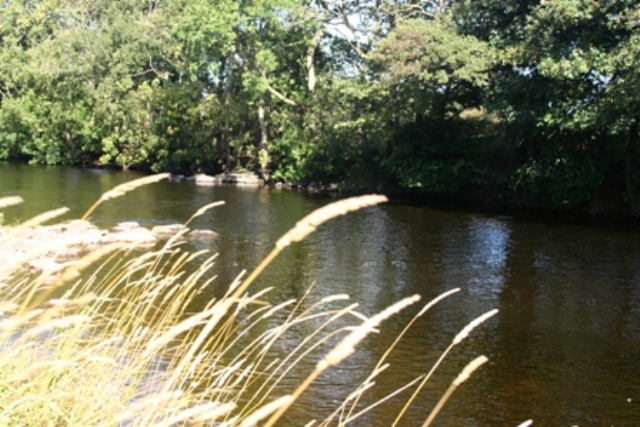
There has been only one place to catch salmon at Finavon this week. We have caught and returned four fish between 7lbs and 20lbs in the little stream known as Harry’s Bar (Bogardo Beat), just above the deep water at the head of Melgund Pool. Although there have been fish showing in the main pools, they have been reluctant to take, and all of those seen were coloured. In the previous week there were two fresh grilse caught, one of which was sea-liced.

As we go into the last 10 days of the 2013 season I note that it has been a poor year for angling – the lowest catch of salmon and sea trout at FCW for more than 30 years. But it has not necessarily been a bad year for the fish. It will be interesting to see what the Usan nets declare and how many keep-ins there were during the season.

Early spawning of sea trout took place and appears to have been successful in the Finavon spawning gravels in September, and there are plenty of salmon waiting to spawn when the water temperature drops decisively, probably next month and in December.

In my view the river is in good ply and, given reasonable conditions over the next 8 weeks, there is no reason why the spawning period shouldn’t be productive. In that respect we are wholly in the hands of Nature.
TA

Autumn arrives & puts the season in perspective

Autumn grasses at VolcanoBeechesin very low water 9.13

These bulletin blogs represent news about Finavon and the South Esk, and my views as a riparian owner. While I may digress at times to write about other places, these are not the views of any other organisation, nor are they designed to promote the interests of any individual or organisation other than Finavon Castle Water and factors affecting the fishery. Tony Andrews

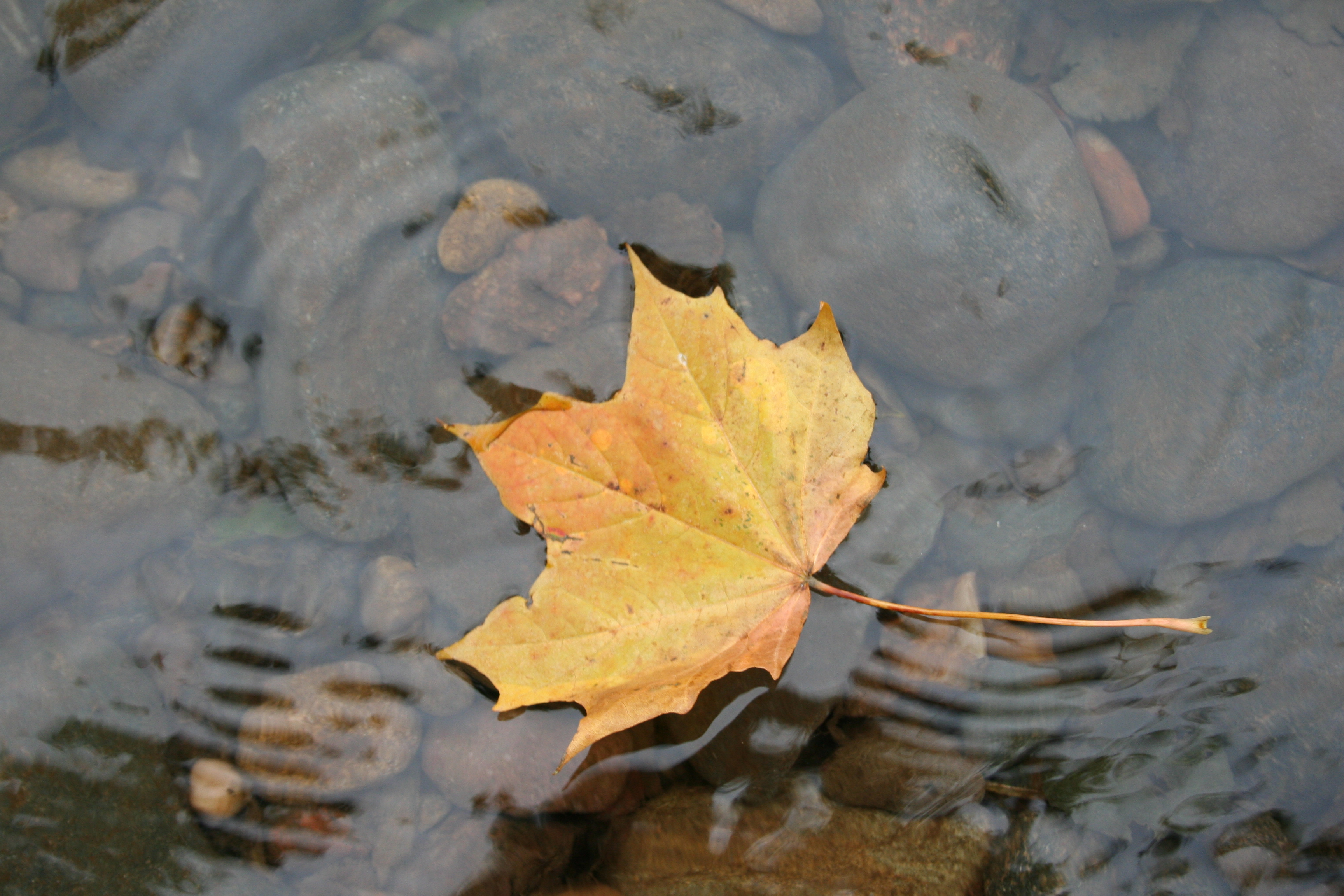
Although the temperature hasn’t dropped – yet, the leaves, dessicated by the dry summer, have started to fall into the river, making fishing an irritation at times. There are a few fish about, less than we might have expected in the circumstances. Many anglers were hoping that the long drought might have held back fish, so that when the first flood arrived, as it did (briefly) last week, there would be an in-rush of salmon into the pools. We all hoped for silver MSW autumn salmon, but what we got was a few rather coloured fish which had probably been hunkered down in some of the lower river pools.

Osin unilaya para

We have seen a few salmon, all coloured, caught and returned. My guess is that many fish will have arrived off the coast earlier in the season and either were predated or netted, legally or illegally, and some may have died from stress before entering the river. While there may be a late autumn run, I think encouragement of a consistent level of cool, fresh water flowing into the sea at Montrose will be the deciding factor. But of course that is pure speculation, and is not supported by data.

South Esk Tagging Project

I have just heard that two salmon were tagged at sea in April 2013 and were later recorded as having entered the Spey! Given that only 38 fish were tagged at sea, and a further 22 in fresh water at Upper Kinnaird on the South Esk, these two Spey fish represent a sizeable proportion of fish ‘belonging’ to the Spey being caught by Usan Fisheries. We don’t really need any more evidence that the impact of Usan nets is probably affecting all east coast rivers, including ‘the rivers in-between’ (see the bulletin for 22 September).
Perhaps the inclusion of the Spey will add weight to the powerful argument that mixed stocks netting has had its day, and that it is impossible to manage Scotland’s wild salmon effectively while the practice continues.

Tagging for 2013 is now complete with 38 salmon tagged at sea after capture in the Usan nets, and 22 in the South Esk after being caught in a net trap positioned in the Arn Pool at Upper Kinnaird. It is a pity that no contract was agreed between the Government and Usan Fisheries to continue tagging into the month of May. This I understand was for commercial reasons, presumably because Messers Pullar did not want disruption to their extremely valuable May netting.

As I mentioned in mid April, May is now the most prolific month for spring salmon on the South Esk. In years gone by it was April that saw the main run, but that has changed. We will therefore not get the data we need to find out where our May-run spring salmon spawn and where their progeny have their nursery areas. That is a pity, and I suggest is against the public interest. In other words, that contract with Usan Fisheries should in my opinion have been demanded and signed. After all, we are talking about a national and natural resource here, and we all are involved (or should be) in protecting it for future generations.

So, how many salmon are now in the South Esk catchment, as revealed by recordings on the positioned static receivers?

22 salmon were tagged in fresh water at Kinnaird

13 tags remain below the dyke (some which have been regurgitated and are now sitting on the bed of the river)

6 salmon have crossed the Kinnaird dyke

1 salmon is already in Glen Clova

4 are unaccounted for

24 radio-tagged salmon, including the 2 netted at sea, now appear to be in the South Esk, which is more than at any time in 2012

38 salmon were tagged at sea in Usan nets

2 entered the South Esk

1 entered the Tay

7 entered the North Esk

2 entered the Spey

26 are as yet unaccounted for.

These 60 fish are the baseline for the 2013 tracking exercise whose objectives are:

1. To find out where South Esk springers spawn

2. To find out which rivers the Usan nets are (lethally) exploiting

Of the 22 early season salmon caught in the Marine Scotland net in the Arn Pool at Upper Kinnaird we now know that some tags were regurgitated and later recovered, and that some 6 fish triggered the Bridge of Dun receiver as they left the river, so we may have a dozen fish to give us the data we need to establish where the spring salmon spawn and where their progeny spend the pre smolt part of their lives. Not a very robust sample.

TA 8/10/13

Return to the Rottal Burn

These bulletin blogs represent news about Finavon and the South Esk, and my views as a riparian owner. While I may digress at times to write about other places, these are not the views of any other organisation, nor are they designed to promote the interests of any individual or organisation other than Finavon Castle Water and factors affecting the fishery. Tony Andrews

I admire the Rottal Burn restoration Project. With squinted eyes and a bit of imagination, I can surmise what the new course of the burn and its surroundings might look like in 20 years from now. It looks nice, doesn’t it? The burn now has natural features such as a riffle-pool-riffle sequence, bends, deeper pools, gravel bars and erosion zones. It is starting to look natural, which should please the human eye. Furthermore, I have seen both fry and parr in its pools.
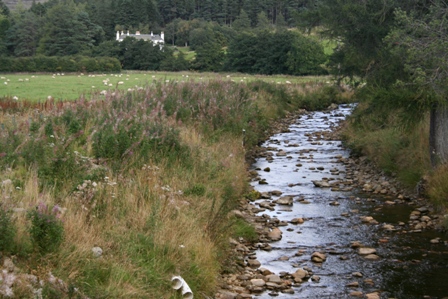
Rottal original channel

Looking upstream towards Rottal Lodge from the bridge
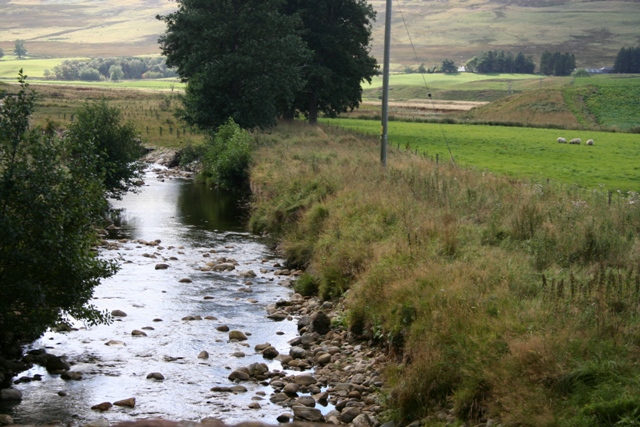
Rottal original

The view downstream from the bridge to the start of the restored section of the Rottal Burn

The two photos above show what the Rottal Burn looked like before the restoration in 2012. The straight, dredged channel can clearly be seen, but we should not dismiss the benefits of this high energy, well oxygenated channel that contains ideal sizes of spawning cobbles and gravel. The issue here is not the spawning itself, but the lack of cover and varied habitat for juvenile salmon and sea trout at the fry and parr stages of their growth. The photos were both taken from the bridge at Rottal looking upstream towards the Lodge and downstream towards the confluence. These two photos are a good basis from which to compare the other photos in this blog.

It is well worth reading the ERFT report on the management plan 2009-2012. The report lists the  benefits of the planned restoration as the creation of diverse riparian and aquatic habitat, a return to a more natural flow regime, attenuation of flood peaks, visual enhancement of the area, restoration of functional, sustainable populations of salmon and sea trout, investigate the transfer of freshwater mussels into the burn, develop a demonstration site for future research.

www.erft.org.uk/images/uploads/EsksFMPupdatereport.pdf

Nevertheless, there is good reason to ask some basic questions about the genesis of this project, not least among which is the question, “Why did we do it, as opposed to a more obvious stock enhancement project based on a credible baseline data set?”
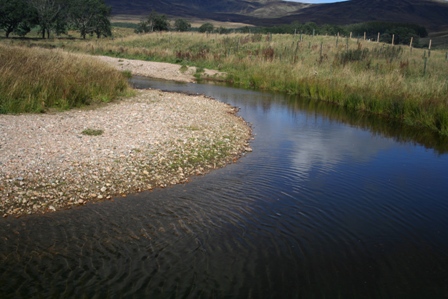
Rottal Burn corner pool with depth

A bend in the newly scoured channel, a naturally depositing gravel bar, and a pool with real depth and bank cover for juvenile salmon and seatrout.

The Rottal Burn restoration was an innovative and costly project, but was this high profile morphological intervention necessary?
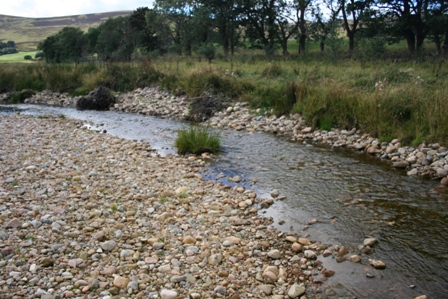
Rottal excellent riffle stretch

Excellent riffle and cobble stratum for spawning and juveniles.

Did the project provide value for a considerable amount of tax payers’ money? If you had £150,000 (or thereabouts) allocated to enhancing South Esk habitat for salmon and sea trout, is the Rottal project how you would spend it?
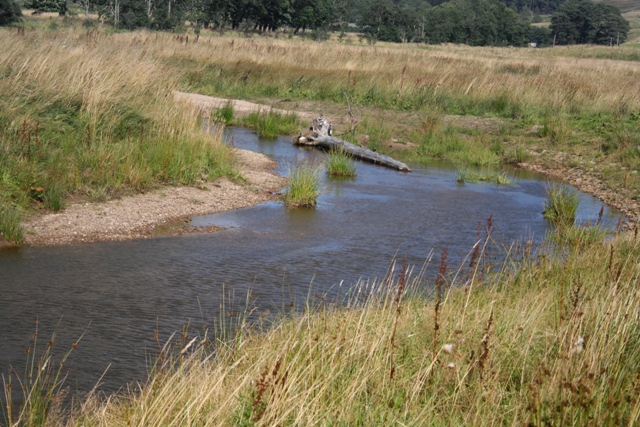
Rottal Burn Riffle & bend

Woody debris and a deeper channel for juveniles. Just one winter of floods and scouring produced this ideal salmonid habitat.

How will we know if it was successful or otherwise?
Rottal Burn 9

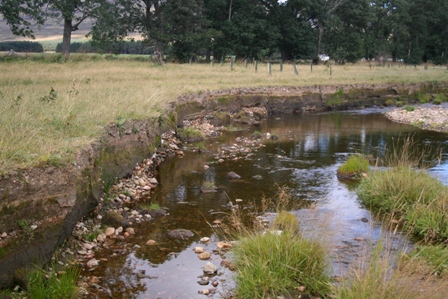
Erosion in progress. Good quality spawning stratum for salmon in a stretch of the new channel which is clearly widening with every flood.

In other words, are there success measures in place and, after one year since the project was completed, are its outcomes becoming apparent?
Rottal Burn 10

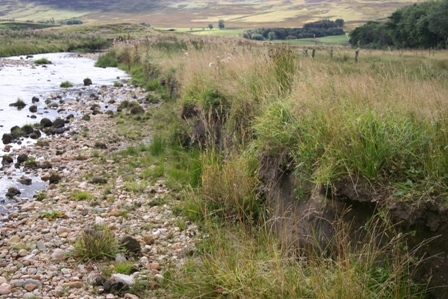
Erosion and riffle. The natural process of erosion, a constant and continuous process since the last ice age in Glen Clova, defines the nature of the ‘itinerant’ and meandering Rottal Burn. All we can do is to start the process and then hand it over to natural morphology.

These questions need to be answered in the context of the priorities for restoration of the South Esk catchment as a whole. It might be said that we should have waited until the results of the Marine Scotland (spring) salmon tracking project were available. A question could be asked about baseline data; for example, were data available on redd counts in the dredged channel of the Rottal burn, and the results of juvenile counts in the burn prior to the project? If there are no such data, how can we know whether the project has improved the recruitment performance of the ‘improved’ section of the burn?
Sepajari Rottal

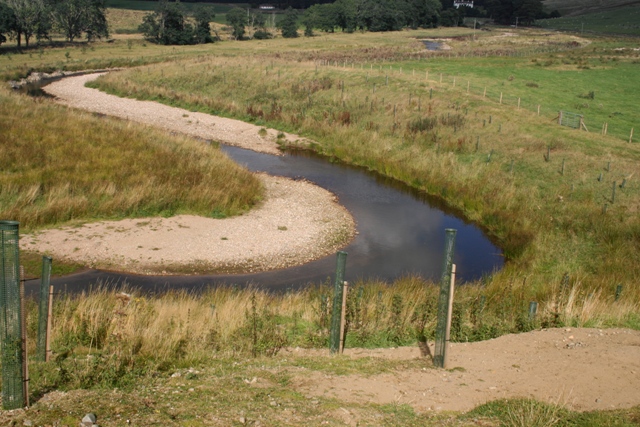
This visually attractive meander had an artificial start, but nonetheless, it is a successful attempt at achieving habitat diversity.

This project should be the start of a debate, not its conclusion. Visually it is fair to say the Rottal Burn project has so far been a success. We need to bear in mind what it looked like before the restoration – a straight dredged channel of one kilometer. Ideally we should now see:

a) reports on salmon and trout spawning and parr recruitment and, if possible, a comparison with what was there before

b) reports on improving fauna and flora diversity, including invertebrates and intoducing the freshwater mussel. Is there better biodiversity than before the project? A step-by-step monitoring of progress would be helpful.

c) comparisons with other tributaries in the upper and middle catchment and the populations they support.

Rottal Wildlife observation hut (2)

Wildlife observation hut and ‘Field Classroom’ overlooking the restored Rottal Burn

Having got ourselves enthused with the innovation, we now need some cool, objective data to give us a proper evaluation of this project. I look forward to that, but I recognise that it may take time.

TA 23/9